
Ammacurious
Very little in the Amanita muscaria world is simple or obvious, especially what happens when you eat it.

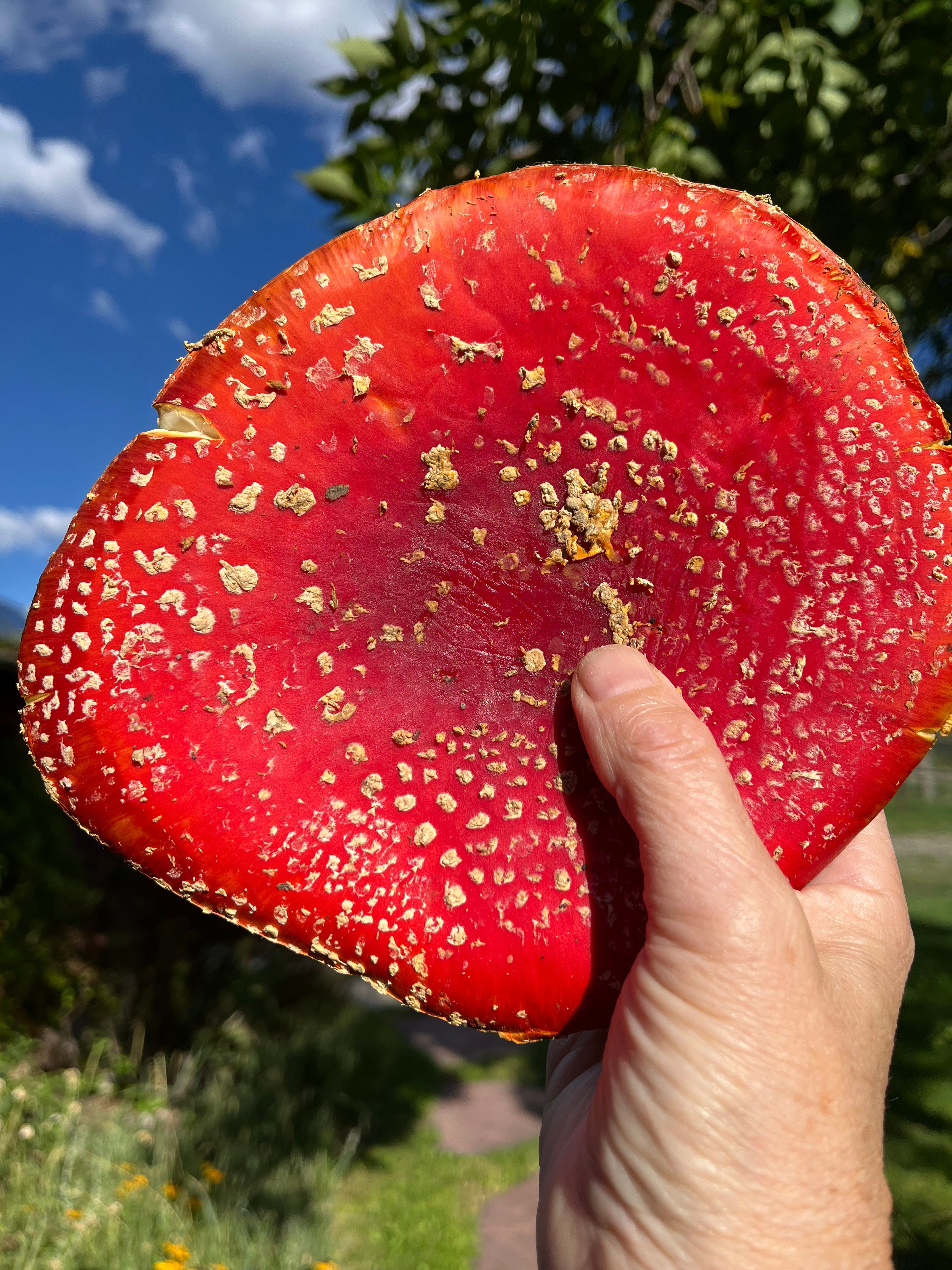
Sorry for the delay in publishing. I’ve been traveling a lot and writing talks instead of essays. But I am glad to jump on this subject as it has become more timely than ever. In December, the FDA issued a letter warning the industry--and by that they mean gummy and chocolate manufacturers--that A. muscaria is an unauthorized food additive. It is not recognized by the FDA as safe and producers that use it may face “enforcement action.”
Six months prior to the FDA’s Letter to Industry, a group of researchers published a warning in the American Journal of Preventative Medicine that A. muscaria posed a public health risk.
The tipping point seems to have been the Diamond Shruumz chocolate recall due to reports of users experiencing seizures, vomiting, and loss of consciousness. A couple of people may have died. Folks thought they were taking psilocybin-spiked candy, but when the FDA analyzed samples, they found a range of psychedelics: DMT, Psilocin, and ibotenic acid and muscimol, the primary psychoactives in A. muscaria and it’s relatives, as well as other compounds. Products like Shruumz fall in the supplement category, so they are not regulated, which means it’s a buyer beware situation. The same is true for those that use the mushroom itself.
A. muscaria, also known as the Fly Agaric (so named because it was once thought to stupefy flies) is not on track to be banned like Psilocybe mushrooms. It is still legal in the USA (though banned in a couple of states and some countries; Lithuania banned A. muscaria this month). But for those who have drifted into the mentality that A. muscaria is interchangeable with psilocybin, this statement from the FDA may be a wakeup call.
Amanita muscaria is, in my view, a very tricky mushroom to use medicinally or casually. In this essay I am going to explain what is so tricky about it. I’ve decided not to spend any time on the speculative histories of A. muscaria in religion. I love those stories, especially the one about Santa Claus being a proxy for the mushroom, but honestly it drives me crazy that so many people in the psychedelic world take them literally. I don’t like being the killjoy, so I am just not going to give it any real estate here. For that, check out Brian Muraresku. That said, based on work done by the late mycologist Gary Lincoff, I am persuaded that the Russian Orthodox Church, in cahoots with Stalin, suppressed shamanism and what some reindeer herding tribes called mukamor (the A. muscaria) as the mushroom was used for divination, like finding fresh grass for the herds, as a ceremonial inebriant, and in communication with the spirit world, which in general the church claims dominion over.
Amanita muscaria is the iconic red mushroom with the white dots. It is the fruiting body of a mycorrhizal fungus that occurs in temperate forests, primarily in association with pine and birch, beech and oak throughout North America and Europe and Russia. Because of that mutualist relationship, they are only wild collected. We look for the mushroom when we are car hunting in Colorado because porcini grow under the same trees and at the same time, but while the duff-colored porcini may be hard to see unless they are humongous, you can spot the bright red cap of Amanita easily from the road.
There are a few psychoactive Amanita species, including the powerful Amanita pantherina, as well as various subspecies which are essentially variations on the genetic theme. Much of what I report here, is, to my understanding, true of all psychoactive Amanitas, but A. muscaria is the most commonly used species and that’s why it dominates what we know. Other species are mainly eaten by those who collect them. Until recently, the only people I knew who ate any psychoactive Amanitas were mycologists, foragers, or folks with a cultural tradition of consumption, like my dad’s friend Nick Mastropietro, a tough old Italian Christmas tree farmer from Yonkers. Dad was hanging out with Nick one day and Nick pointed out the A. muscaria growing underneath the conifers.
“That’s a good mushroom,” he told my dad.
“Are you kidding? Dad replied. “That’s poisonous!”
“No,” said Nick. “It’s good. It’s just after I eat it, I always fall asleep.”
“You’re lucky you wake up,” my dad said. (Nick is now deceased, though not due to his mushroom consumption. He died in 2019 at the ripe old age of 91.)
My Dad’s attitude about A. muscaria reflects most people’s opinion of the mushroom. But there is a growing cohort of folks that are curious about it, I suspect because of the excitement many myco-newbies have about the medicinal attributes of mushrooms more generally. Indeed, in 2023 A. muscaria was among the most searched natural products on the internet for healing and inebriation, according to Psychedelic Spotlight.
Who is Taking This Mushroom?
My observation is the mushroom seems to be attracting folks who generally believe medicinal mushrooms can cure a variety of ailments and A. muscaria is but another mushroom in their arsenal. I know of a college professor who takes a microdose of psilocybin in the morning to mitigate her mood during the day and a small dose of A. muscaria at night to help her sleep--kind of the mushroom version of a coffee in the morning and a glass of wine at night. Judging from the social news threads and within the amateur mycology community, that seems to be the way most people are using the mushrooms: in small doses to enhance mood or help mitigate mood disorders, to help taper off medications like benzodiazepine, and/or improve sleep. Less commonly, I’ve observed, are folks who take large doses to trip. In general, from reading trip reports (that is what they are called) it seems large doses are often stressful, sometimes like feeling extremely drunk, replete with blackouts and inappropriate behaviors.
Historically, A. muscaria has been used by tribal peoples from the northern latitudes where the mushroom proliferates. Gary Lincoff led two expeditions to the Kamchatka Peninsula in eastern Russia in 1994 and 1995. Kamchatka is home to reindeer herding tribes like the Evan and Koryak. Gary’s widow and executor Irene Liberman shared his field notebooks with me and gave me permission to report on them.
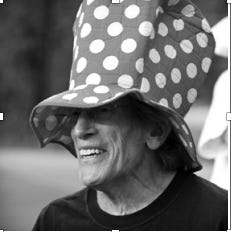
Photo: Michael Wood
Gary’s field notes reflect his unique and uniquely quirky personality. For example, his notebooks contain Cyrillic spelling for toilet, customs, café, and buffet, but also for random stuff like Leseechki (little foxes). One of his notes that I think will stick with me forever was his observation that A. muscaria seemed to grow on tundra without any symbiotic trees present. And then he realized the tundra was covered in dwarf birch—low shrubby bushes better adapted to the area’s strong, persistent winds. But the mushrooms grew to their normal size. Gary reported that tribal shamans dispense A. muscaria to increase energy, to heal wounds and treat arthritis pain, as sleep aids or an invigorating tonic for the elderly. My dad likes to take a snort of bourbon in the morning (he’s 98). It seems that some elderly Koryak like a snort of Amma tea to get going in the morning, too.
Other texts have noted the inebriating aspect of the mushroom. An early 19th century traveler wrote that the Koryak tribe’s “passion for strong liquors, increased by the difficulty of procuring brandy, has led them to invent a drink equally potent, which they extract from a red mushroom.” Native American have reportedly used the mushroom, too. During a meeting of Amanita muscaria enthusiasts, one fellow told a story of witnessing a Tlingit potlatch in Alaska where the mushrooms were consumed as part of the general celebratory atmosphere.
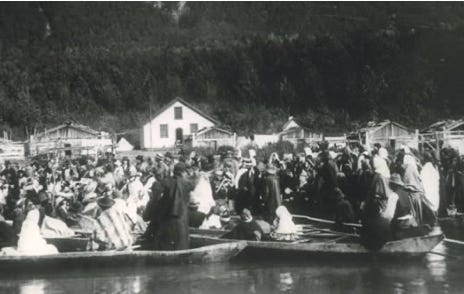
Gathering for a potlach in Kluctoo circa 1895. Haines Shelton Museum collection
Probably the most famous A. muscaria user is the YouTube video maker Amanita Dreamer. Amanita Dreamer is an articulate, plain-speaking middle-aged woman with a southern drawl who makes videos about using A. muscaria but could just as easily be telling you how she replaced the baking coil in her electric oven. Another is the Russian expat Baba Masha, author of Microdosing with Amanita Muscaria. Her book is a huge compilation of anecdotal reports on a wide variety of healing modalities, from depression to gingivitis, and their preparation, from teas to tinctures. You can watch a podcast with her here. Beyond these two, there are many folks experimenting with or at least curious about this mushroom. Just to give you an idea of the numbers, the Facebook group Amanita Science and Magic has over 90,000 members.
What is a Trip Like?
Depending on the dose, trippers have described long sleeps with vivid dreams, fast moving streams of consciousness, ego dissolution, and degrees of self-awareness. They also describe looping behaviors, like dropping your glasses over and over. (You can hear Paul Stamets tell his story about this on the Joe Rogan show. Jump to 45:22). Or time may skip, like finding yourself suddenly at the bottom of the stairs, having completely blanked out on the walk down. I’ve heard stories about great bursts of energy mixed with irrationality: one fellow reported running and falling and hurting himself but then getting up and running on his injuries. This happened over and over. Many experience dysmetropsia or Alice in Wonderland Syndrome, where small things seem huge—for example, a curb seems almost too tremendous to step up to—and large things seem small, leading to doors being slammed and chairs being flung across the room when all someone was trying to do was be gentlemanly.
There is no reported hangover, but trippers on A. muscaria have experienced blackout periods where they don’t remember what they did or how they behaved, which I guess is a type of hangover. One tripper reported on the social news networks that the day after a trip he looked at his phone and realized he'd had a lengthy conversation with his mom. He remembered nothing about it. A few rare cases of extended difficulties have occurred, like suddenly the trip starts again many hours after the tripper has come down.
What Are The Psychoactives?
There are two primary psychoactive ingredients in A. muscaria, ibotenic acid and muscimol. Even though the mushroom is called Amanita muscaria, muscarine is only present in trace amounts; not enough to cause any symptoms in most cases, though if you got a proper dose of muscarine you’d get very sweaty and drooly and possibly pee yourself, according to Lincoff’s old (1977) but still relevant book, Toxic and Hallucinatory Poisonous Mushrooms. Another trace is muscazone, which, in larger doses, causes visual damage, mental confusion, and memory loss. But you don’t need to fret over that either. It’s the muscimol and ibotenic acid that are responsible for the experience people have when they consume the mushroom, and it’s the ratio of ibotenic acid to muscimol that seems to affect the nature of the trip.
Muscimol acts on GABA receptors in the brain, causing hypnotic sedation, delirium, and hallucinations; it is a significantly stronger psychedelic than ibotenic acid according to Wikipedia. The GABA system is also indicated in alcohol inebriation. Which is probably why many folks have described their A. Muscaria experience like being extremely drunk.
Ibotenic acid is described in most literature as a neurotoxin, though some Amanita muscaria users point out it causes lesions when injected into mouse brains--not the same thing as oral ingestion at all (though the risks of oral ingestion are unknown). Ibotenic acid acts on glutamate receptors in the brain which may explain the hyperactivity, twitching, and seizures some people report.
Ibotenic acid is a prodrug to muscimol. When ibotenic acid encounters acids—like lemon juice or the acids in your gut, or dry or wet heat—it can knock the carboxyl group off the molecule. Ibotenic acid minus its carboxyl group is muscimol. The opposite may happen, too: Muscimol may convert to ibotenic acid by means of glutamate decarboxylase. That may explain why some people experience fluctuating symptoms, according to the authors of a paper, “The Deceptive Mushroom” where they are alternatively dizzy and confused, tired or experiencing more typical trippy symptoms like hallucinations.
Both ibotenic acid and muscimol are readily absorbed by the gut, cross the blood-brain barrier where they do their psychoactive thing, and are eventually excreted in urine. Muscimol remains psychoactive even after it’s been through the user’s GI tract, which is why the pee of someone who has consumed the mushroom is potentially psychoactive, too.
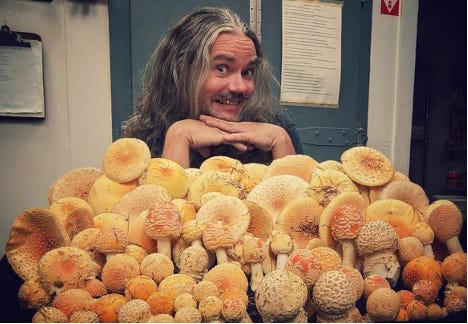
“Amanitologist” Spike Mikulski
Preparations and Dosing: It’s a guessing game
A dose is determined by two things: the degree to which the ibotenic acid in the mushrooms is converted to muscimol, and how much of that product is consumed. But it is unclear how the different psychoactives in the mushroom affect different people, or what combination of the psychoactives does what. In the vacuum of reproducible information, most users of A. muscaria figure out dosing for themselves.
One such person is a fellow who came on my radar when we were teammates on the North American Mycological Association’s culinary committee. I was intrigued by Spike Mikulski from the start of our committee team meetings. He always had to relocate outside to get good reception—he lives in the woods on Rhode Island—and as a result he used his cell phone for the meeting and tended to hold it so close to his face that his Salvador Dali-style mustache spanned the screen. His knowledge of psychoactive Amanitas—which he occasionally shared in our meetings—was impressive, and it turned out Spike has been drinking A. muscaria tea (or its relatives) for years. “It brings me to baseline,” he told me. “Like how my body is supposed to feel. I get a good night sleep and I wake refreshed.”
I eventually quit the culinary committee, but I stuck with Spike. So, on Halloween of 2023 I invited myself to Rhode Island for a visit and a hunt. Neither Amanita muscaria nor A. pantherina grow in Rhode Island, according to Spike, but many close cousins of other names do. Not only does he know how to prepare the mushrooms he collects for psychoactive use, from trips to sleep aides, but he also knows how to prepare them for the table. Since the lion’s share of what is known about the psychoactive properties of A. muscaria is anecdotal, I figured someone like Spike is an invaluable source.
I drove up to Providence and met Spike at his place, not the easiest to find as it was on a narrow, wooded road, the kind of road folks who don’t like nosy neighbors prefer, and though various homes had Halloween decorations up, the vibe wasn’t welcoming. Lots of barking dogs and no trespassing signs. Our plan for the weekend was to hunt mushrooms, and prepare them for the table, and to make a medicinal tea.
The mushrooms weren’t up unfortunately, or they had been but weren’t anymore. But luckily Spike had a tremendous stash of various dried psychoactive Amanitas in jars in his pantry. They were all caps: that’s where the psychoactives are mostly found, just under the red skin. (Dried Amanita, like Psilocybe, can stay psychoactive for a few years if stored out of sunlight.) Some people do eat Amanita muscaria fresh (or the other species and subspecies in the psychoactive group), but most do not have a way of determining the ratio of ibotenic acid and muscimol present in any given specimen. The potency of these mushrooms can vary among species and subspecies; from one flush to another; even from specimen to specimen. So dosing fresh mushrooms is something of a roulette game.
Spike says fresh specimens increase his energy and adrenaline but they also cause twitchiness, “salivations,” and perspiration. I have heard a few testimonials suggesting that “small” amounts—whatever that is—of fresh or a tincture of A. muscaria made with fresh, can be energizing, something like Adderall, I guess due to the presence of ibotenic acid. (Though too much, according to some folks, can be aggravating.) Anyway, Spike associates those rushy feelings with the story that maybe the Viking berserkers used the mushroom to psych themselves up for warfare (and indeed, researchers who analyzed small spoons found in association with the remains of Roman-era Germanic warriors speculate the spoons might have been designated for dispensing drugs). Spike rarely eats A. muscaria raw, though he does eat the first mushroom he finds each year. “It’s a welcoming ritual for the beginning of the season,” he said. “Like a private harvest festival.”
Most users dry the mushroom caps in a dehydrator until it is cracker crisp. Drying temperatures are the same for culinary mushrooms: 140F for around 8 to 12 hours. Unlike with dried Psilocybe mushrooms, Amma trippers would have to consume a fair amount of dried mushroom matter to get high. According to Dr. Kevin Feeney, author Fly Agaric: A Compendium of History, Pharmacology, Mythology, and Exploration, a low dose of a moderately psychoactive specimen, is five to ten grams. Spike pointed out that since eating multiple grams of dried A. muscaria is rather disgusting, making a tea is a better option. Some folks do nibble a small amount—whatever that is—in which case, said Spike, “one does get a burst of adrenaline.”
Drying may convert some of the ibotenic acid present in the mushroom into muscimol. I should note that Amanita Dreamer insists the mushroom must be dried at 160F to achieve what she claims to be 30% conversion of the ibotenic acid to muscimol. Many folks try to convert as much of the ibotenic acid into muscimol as possible, as the ibotenic acid is associated with the more unpleasant aspects of consumption, like twitching.
And the most common way to do that is with boiling water. Both ibotenic acid and muscimol are water soluble. When the dried mushrooms are boiled it converts some or all the ibotenic acid into muscimol, meaning the heat knocks off the carboxyl group on the ibotenic acid molecule, leaving muscimol behind. Both the ibotenic acid and the muscimol are pulled from the mushroom by the heat and dispersed into the water. The mushroom itself becomes inert, depending on how thorough the extraction is, and can be used in recipes. I once ate a semi-converted A. muscaria mushroom—sauteed with butter. It wasn’t very exciting to eat, but I fell into a coma-like sleep afterwards.
The water, infused with the psychoactives, is what folks call the tea and can be used for whatever you use it for: to trip, to calm your nerves, to help you sleep. The psychoactives typically kick in 45 to 90 minutes after consumption and the effects last 6 to 8 hours.
Tea can be made with fresh mushrooms, in which case Spike uses ten times the weight of dried mushrooms. As when the whole mushroom is eaten fresh, the user may experience adrenaline bursts, salivation, muscle spasms, jitteriness, mild drunken euphoria, and nausea. Dried mushroom tea does not, according to Spike, pump up the adrenaline. He said there is less muscle spasming, and more drowsy effects.
But unless you have a lab at hand (and the know-how) one can only estimate how much of the ibotenic acid present in the mushrooms is converted to muscimol by hot water extraction. Nor is it feasible to determine what percentage of ibotenic acid will go on to be converted to muscimol by your gut acids.
A lot of people use Amanita Dreamer’s recipe for making tea. She calls for 250 ml distilled water brought to boil then turned down to a simmer. Then she adds 15 grams of dried mushroom collected from several different specimens in case you get a “hot dose” --an especially strong mushroom—and simmers them uncovered for twenty minutes over a medium heat, adding ¼ cup water if necessary to keep the liquid volume at 1 cup. The mushrooms’ color should wash out, and the liquid should be the color of a breakfast tea. The tea is then strained into a sterile jar and refrigerated or frozen. How much of that tea causes what effects is determined by the individual user, but most people recommend starting with a low dose. If, for example, you have made 1 cup of tea, starting low, according to the Compendium, would be a half cup.
The Dreamer’s recipe does not accomplish a full conversion of the ibotenic acid to muscimol, but it works for the her. For further conversation, she says, you must either do a lemon Tek, which is adding lemon juice, or use another process, like fermentation (“I have a video for that,” says the Dreamer, who also wrote a book called Dosing Amanita Muscaria, and what to expect).
Another YouTuber, the “moon priestess” Uri Lee recommends for one person, add 1 teaspoon ground dried A. muscaria to 1 cup water and simmer for 20 minutes. She says when the tea turns from red to brown it is ready. Then she adds the juice of half a lemon. Uri recommends you drink the cup and an hour or two later it will be easier to fall asleep and when sleeping you will have lucid dreams and “your body will heal.” There are many moon priestess out there, and they seem to share an equally inexact approach to dosing this drug. Not that I can blame them. There is little to no science to depend on.
Here is Spike’s Amma tea recipe, which you should understand is not reproducible, but works for him. I didn’t end up drinking any of it because I had to drive back to my hotel on very dark streets which were already creepy enough.
3 cups of water
21 grams of dried A. muscaria
Place the water and mushrooms in a pot. Bring to a boil on high, then turn to low. Simmer for 40 minutes unto the water is reduced by 40%. Cool and strain. A serving is 9.5 ounces, or 1.3 cups of tea.
He drinks the whole cup or most of it anyway, and in 45 to 60 minutes he feels sleepy, stumbly, and forgetful. “You might not fall asleep right away, he told me. “You might feel restless at first, but when you do sleep it’s big: 10 to 12 hours.” Vivid dreams are common. Spike told me about one where he encountered a deceased friend. “I was aware enough to realize this was an opportunity to spend time with my friend.”
The Lincoff expedition to the Kamchatka Peninsula recorded a Koryak recipe: ten to fifteen dried mushrooms are combined with five liters of water, blueberries, and sugar, and boiled for thirty minutes. One half a cup of this mixture, they reported in the anthropology magazine Shaman’s Drum in 1969, would make most tribespeople energetic and celebratory, but others sleepy.
If you look, you will find there are many versions for preparing the mushroom and many opinions about how much ibotenic acid is okay. You’ll see folks citing variables that can affect the rate of decarboxylation, like the pH of the water and the temperature of the dryer when you dry the mushrooms. Recently, a colleague showed me her recipe for making a milk punch with A. muscaria tincture made with vodka. In a clarified milk punch that you’d get at a bar, milk is combined with alcohol leading to curdling; the milk’s casein proteins bind with polyphenols in the alcohol. The curdles are then strained out. Polyphenols can cause bitter tastes which is why bartenders make milk punches, but otherwise they are a good thing, as polyphenols have antioxidant effects in humans. I can’t figure out what the benefit of clarifying an A. muscaria tincture is, but my colleague thinks it affects the experience. “Everything feels a little more mystical,” she said.
In Dr. Feeney’s book he includes a recipe for “Soma,” a proximation of the magic drink in the ancient Aryan’s Rig Veda. Users may boil the mushrooms and then add Acidophilus milk and simmer, which may further catalyze the conversion of ibotenic acid to muscimol. But really, who knows?
The Koryak recipe has been tested on many bodies, using mushrooms from the region. But all these other recipes are mainly tested by one or a few persons, and their reproducibility is nearly impossible. An Instagram friend, for example, made a tea with sixteen grams of poorly dried A. chrysoblema (the midwestern variety) that he stated was excellent for sleep. His second batch was made from seven grams of properly dried mushrooms and 45 minutes after drinking the tea he couldn’t remember anything (both batches were boiled in 3pH water for three hours for a full decarb). Here’s what he said happened: “I did several unusual things around the house and online. Nothing inappropriate, just weird for myself to do. I woke up the next day feeling great but questioning who moved things around my house? There is good medicine there,” he concluded, “you just have to find what’s right for you. And don’t expect it to be the same next time you make a batch, even using the same ratios.”
It’s important to be very careful when it comes to A. muscaria and really, any psychedelic mushroom. Your body’s response to the mushrooms, and the mushroom itself, are random factors that can upend the best laid plans. For example, inexperienced users have been known to unintentionally boost themselves because A. muscaria effects can take up to three hours to come on. And then suddenly they find themselves on the kitchen floor.
The next day.
Microdosing A. muscaria: One person’s tumor reducer is another person’s pimple cream.
There are folks who are into A. muscaria homeopathy, basically zippodosing, if you ask me. Baba Masha (a pseudonym) is a Russian MD who published a rambling, large-scale survey study of small dose A. muscaria use. In it, participants report both consuming the mushroom and making a salve with it, and testify to wide ranging benefits, from reducing spinal disc bulges to fading age spots. Which speaks to the utter subjectivity of the effects.
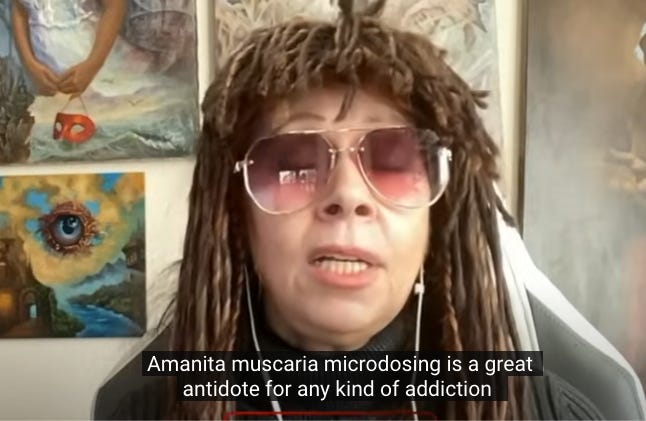
Baba Masha on the Biophilia podcast
Over two years she collected data from some 3,000 A. muscaria users all over the world. She looked at the range of diseases the mushroom might address, the stability of those effects, dosages, duration, and dependency issues. One point she makes in her book, Microdosing with Amanita muscaria that I find persuasive is “each user will have his or her own individual response to the same weight of the same fungus. Individual sensitivity is the most important criterion, which has been proven by thousands of reviews submitted.” (Microdosing with Amanita Muscaria; 37)
Psilocybin microdosers find a dose that is safe and potentially efficacious by titrating. Titrating is continuously measuring a dose, increasing in incremental amounts until one finds the dose they are looking for. But there are a few problems with titrating A. muscaria. First, it is hard to make a consistently potent batch of the tea. So, it would require re-titrating for every batch you make. And Amanita tea goes bad quickly, as I found out. I was looking for the lowest dose I could take that would help me sleep without side effects like dizziness. But after a few tries getting to the dose size (and I started very low, first 50 mg, then 100 mg, then 150 mg—leaving a few days between doses to fully cleanse of the drug) the brew, which I kept in a covered sterilized jar in the fridge, developed an unsightly skin of mold and I didn’t bother to make another batch. My husband Kevin tried the Amanita tea, too, but at 150 MG he experienced vivid nightmares and decided it wasn’t for him.
It may be easier to just use a muscimol extract, which is available through companies like FunGi Extracts. However, businesses like these are wholesale producers and buying muscimol in bulk may be awkward to say the least. I did try pure muscimol extract mixed with warm water. I was supposed to start with 50 mg, but I screwed up and gave myself 500mg. When I started to feel very buzzy, I realized what I’d done and called FunGi’s owner, Brandon Pitcher, who had sent me the stuff to try, and I will be in his debt forever because he texted with me for a few hours while I worried about what was to come. What came was a most disrupted sleep, where I would pass out, and then fully wake up and then pass out again. Not terrifying but definitely exhausting.
An alternative, I suppose, is to purchase a muscimol gummy and experiment with that. However, these products fall under the category of supplements and do not have the same vigorous quality standards as a medicine. For example, assuming they actually contain muscimol, lingering solvents or whatever could be present that could make someone ill. It’s bad business to be a sloppy manufacturer, but not illegal.
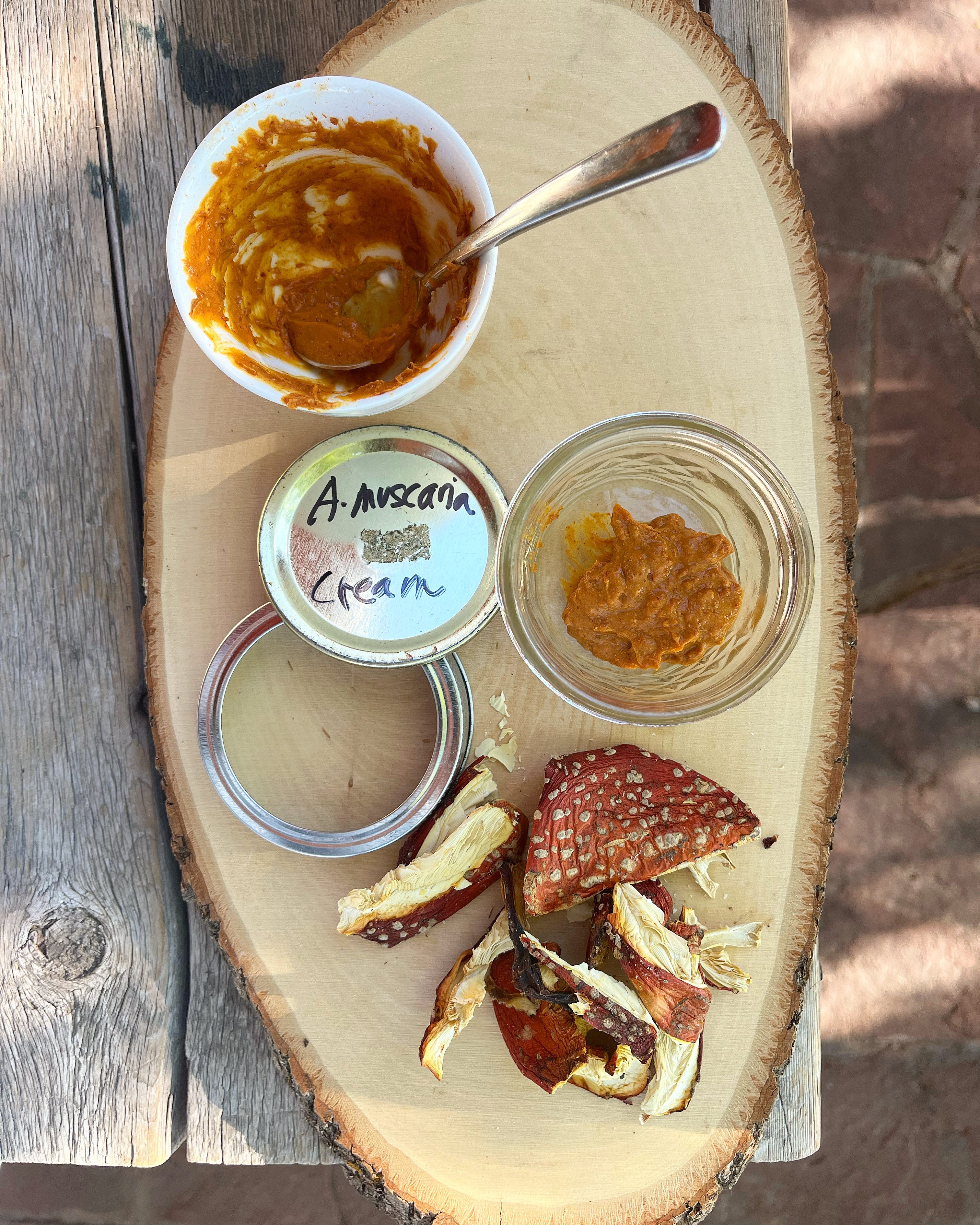
A. muscaria ointment, which all sorts of people prepare and use for topical applications, is, according to Baba Masha, composed of a 50/50 mixture of crushed dried A. muscaria and petroleum jelly and then rubbed on one’s sore joints. I tried it. I was hoping for relief from an ongoing arthritic thumb joint, but it didn’t work for me. You are supposed to let it sit in the fridge for the minimum two full weeks before using, which I did, but maybe it needed more time.
Culinary Amanita muscaria: More foolery than flavor
Over the course of the Halloween holiday, Spike cooked several dishes with fully detoxified Amanitas, like Fly Agaric stuffed clams and Fly Agaric Pirogis. To ensure the mushrooms are thoroughly detoxified, he boils them twice in two separate pots of water for 10 minutes at sea level and rinses the pot between boils. “The double boil is effective with all psychoactive Amanitas, he told me. “At least it’s true of all the ones I’ve played with.”
Anyway, it’s a thing for mushroom enthusiasts to serve A. muscaria dishes at mycophagy events. It celebrates the fact that we amateur mycologists know a thing or two about mushrooms and it’s kind of hardcore. But ultimately the mushroom struck me as more of a delivery system for other flavors. It’s kind of like the bread you use in a bread salad—all the action is in the dressing and other ingredients. I think from a culinary perspective, A. muscaria is more of a conversation starter than a worthwhile prime ingredient. I tried to convince a friend who was planning a mushroom restaurant in NYC to serve it, because I figured the publicity would be awesome. But he didn’t think it was such a great idea. “Eugenia,” he said, “one word: insurance.”
One of my favorite A. muscaria recipes is a ceviche that my friend Gwyn Quillen prepared a few years ago at Fungi Magazine’s very chaotic and sometimes quite inebriated air B&B during the Telluride Mushroom Festival. Most people at the party knew enough about the mushroom and its preparations to be relaxed about it. But there were a few guests who were horrified at the thought, and made a quick getaway once all the porcini were gone.
Amanita muscaria Ceviche
By Gwyn Quillen
Gwyn made this for the gang at the Telluride Mushroom Festival. Since the altitude there is 8750 feet, she boils the mushrooms for 15 minutes, twice. You don’t have to worry about the mushrooms becoming squishy because of all that boiling. Their cell walls are made of chitin which helps the mushrooms maintain their integrity despite the wet heat. This is an adaption of Baja-Style Ceviche by Le Creuset, the French cookware company.
¾ lb A. muscaria, caps and stems, diced small
¼ cup freshly squeeze lime juice
½ cup carrots, diced small
½ cup red onion, diced small
½ cup tomato, diced small
½ jalapeno pepper, seeded and diced small
1 tablespoon chopped cilantro
3 ½ oz full fat coconut milk
1 green onion, sliced on the bias into ¼ inch pieces
Salt to taste
Bring a large pot of water to a boil and add the mushrooms. Do not cover. Bring to a boil and boil rapidly for 10 minutes. Avoid breathing in the steam. Drain. Bring another pot of water to a boil and add the mushrooms again. Boil a second time, also for 10 minutes uncovered, and avoid breathing in the steam. Drain and allow to come to room temperature.
In a large mixing bowl combine the mushrooms and the lime juice. Refrigerate for 10 to 20 minutes.
Remove the mushrooms from the refrigerator and add the remaining ingredients.
Serve with tortilla chips, if you like.
So in conclusion…
If you are interested in using this mushroom medicinally, you must learn how to dose for yourself to acquire certain effects, and that can take time. I was quick to give up, but even if I hadn’t, I couldn’t say what might happen to you. If you are interested in this mushroom to get inebriated and trip, just be careful. It can be very nasty, and lead to behaviors that can send you to the hospital. And if you are interested in using this mushroom culinarily, just don’t surprise anyone. Because when it comes to a mushroom this enigmatic, I can pretty much promise you one thing: not everyone will consent and no one will insure.
Acknowledgements: Many thanks to Brandon Pitcher, John Michelotti, Spike Mikulski, Amanita Dreamer, Kevin Feeney, Gwyn Quillen, Miche Harris, Irene Lieberman, and Jason Salzman for sharing their notes and knowledge.
To learn everything you always wanted to know about magic mushrooms but were afraid to ask, check out Have a Good Trip.
Thanks for this! Amanita muscaria is one of those mushrooms everyone knows about yet no one talks about so it’s nice to see an aggregated collection of info.
There’s a fairy ring of Amanita chrysoblema (I really hate the new name, can we change it back?) that pops up in the fall half a block from my house. While it looks beautiful and enchanting, I’m definitely not going to take any home with me.